Current language:
The number of registered
animals is growing every day
Published: Nov 25, 2026

A dog or cat that has been found may have a home, a caring owner and someone who is just beginning to search for them. But how can the two be reunited when the animal has no ID tag and the person who found them knows nothing about them? This is the purpose of animal identification: to recognise an individual animal and find the information that can help them return home.
A gate left ajar, a sudden noise during a walk or a moment of distraction while opening a carrier may be enough for an owner to lose sight of their pet. In unfamiliar surroundings, even a normally calm dog or cat may behave differently. The person helping them often cannot tell whether they escaped from a nearby home or travelled much further.
Photographs and descriptions can help with a search, but many animals look alike. Permanent identification provides another point of reference: a number that can be read and checked in a registry. Behind that sequence of digits may be the information needed to make the phone call an owner is waiting for.
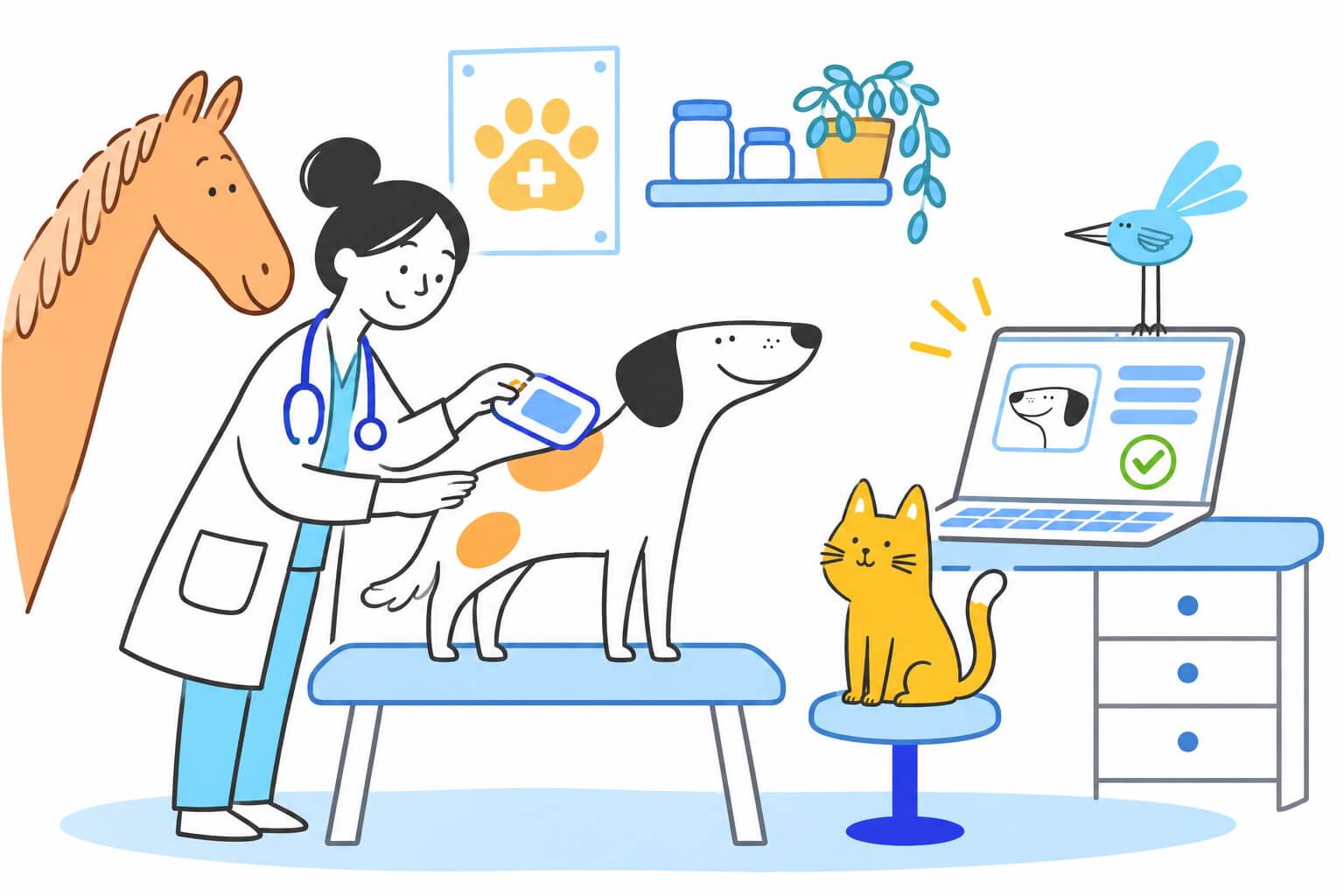
An identification microchip is a small transponder implanted under an animal’s skin. A compatible scanner reads the number stored on it. The microchip itself does not store the owner’s phone number and does not work as a GPS tracker. Contact details are held in a database linked to the identification number.
In practice, a microchip helps identify an animal that has already been found. It does not display their current position on a map. We explain how the transponder works and what happens during a veterinary appointment on our page about microchipping animals.
For a microchip number to help someone contact an owner, three connected steps need attention:
Implanting a microchip does not automatically register it. Confirmation of a veterinary visit and a number written in the animal’s health record are no substitute for checking the database entry. An outdated phone number can make contact difficult even when the microchip number has been read correctly.
Animals travel with their owners, move house and join new families. A dog that has been found may therefore have a microchip registered far from the place where they were found. The person checking the number then needs to know which registry to contact.
WORLDPETNET offers direct animal registration and searches covering its own records and available integrations with partner databases. Cooperation between registries aims to make it easier to locate the source database, including across national borders. This is one of the main objectives described on our page about the idea behind animal identification at WORLDPETNET.
Search coverage depends on the records and integrations available. No result in one search tool does not mean the number has not been registered elsewhere. Nor does a result automatically disclose the owner’s full details: further contact follows the rules of the relevant registry.

Animal identification becomes useful through the people who act on the information available. Owners keep records up to date. Veterinary practices help with microchipping and reading numbers. Shelters, animal welfare organisations and the relevant services can use a scanned number when trying to establish where a found animal comes from.
Identification should also be checked when an animal is adopted. The handover of documents should include a discussion of the microchip number, the registry’s name and how to update the record. This helps the new owner understand where to manage the information and what to do if the animal goes missing.
You do not need to wait until an animal goes missing to put the essential information in order. Take a moment to complete a few simple checks:
find the microchip number in your pet’s documents;
establish which database holds the record;
compare the number in the documents with the one in the registry;
check that the phone number and email address are current;
ask for the microchip to be scanned during a veterinary visit.
A readable ID tag can also help someone without a scanner make initial contact. Identification and registration complement everyday safety measures, including suitable precautions during walks and transport and a secure environment for the animal.
The purpose of animal identification is to reconnect an animal with the person responsible for them. A microchip, a correct registry entry and current contact details do not guarantee a return home, but they can help the people trying to make it happen. Check your pet’s registration before it is needed in a missing-pet situation.



Marking animals with a microchip is the most durable, effective and completely safe method of quick and reliable identification. Every transponder (chip) has a unique number which enables instant identification of the animal and its owner, helping them reunite faster. However, it is important to remember that a chip is just a transponder with an encoded number. It is not a tracking device and contains no data about the animal or the owner! Therefore, in order to identify a chipped dog or cat, it is necessary that a microchip be registered in a national marked animal database...
Read moreIn today's world, responsibility for animal care has become not only a priority for their owners but also a societal issue. One of the most important tools in ensuring animal safety is the chip database. It allows for the quick and efficient recovery of lost pets, which is crucial for protecting their health and well-being.
The introduction of microchipping has significantly improved the effectiveness of efforts to locate lost animals, reducing stress for both owners and their four-legged friends. Registration in the chip database is increasingly required by local regulations, further highlighting the importance of this technology in ensuring comprehensive care for animals.

All kinds of information have been making rounds about the SARS-CoV-2 virus, and the media has been bombarding us with increasingly worrying news about... read the article >>

Cat / Dog missing – Looking for purebred animals. Every day many pet owners have to deal with situations like a missing dog. There... read the article >>

What do the regulations say? As pet owners, we have the right to move freely with our pets. In many countries, there are no... read the article >>

Why Do Our Dogs Run Away? Why do dogs run away? There can be many reasons – from fear and panic, through hunting instincts... read the article >>

Read this letter to Santa and think twice before you give someone a living animal! Dear Santa. . My name is Gift and I... read the article >>

While us humans rejoice when winter finally arrives, happy that we can enjoy its many attractions, our four-legged friends may often find dog winter... read the article >>

Winter continues its relentless attack - snow and cold its weapons of choice. This time of the year is a difficult period for stray... read the article >>