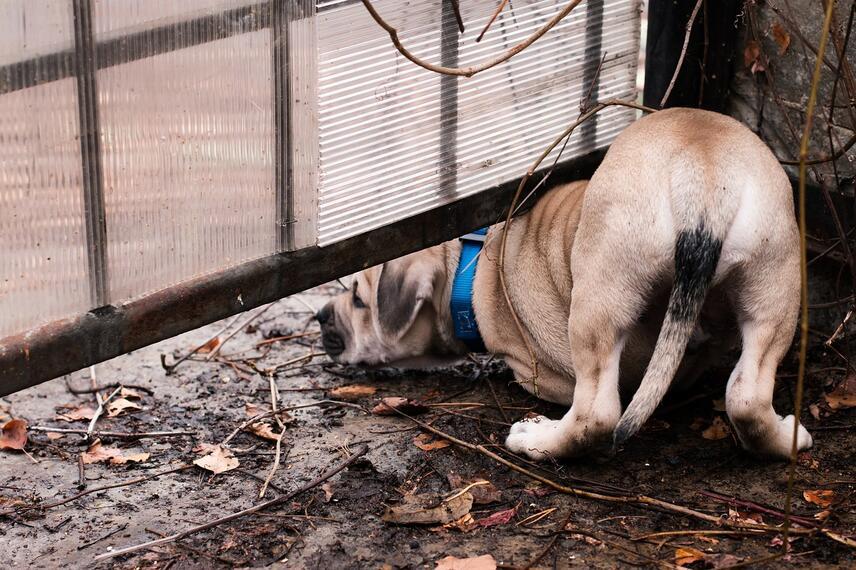
Why Do Our Dogs Run Away?
Why do dogs run away? There can be many reasons – from fear and panic, through hunting instincts and the desire to approach another dog, to an inadequately secured property. A dog may also run away from home or escape from the yard when it finds a way to get outside. This does not always mean that the animal wants to leave its owner. Often, running away is a response to a specific stimulus, strong emotions or a natural instinct.
A missing dog is a situation every owner would like to avoid. Unfortunately, even with careful supervision, unexpected events can occur: a sudden loud noise, a broken leash, an open gate, a dog jumping over a fence or chasing another animal. That is why it is worth understanding why dogs run away from home and from the yard, which situations increase the risk of a dog going missing and how these situations can be prevented.
Understanding canine behaviour is one of the most important elements of prevention. A dog that is properly socialised, has enough physical and mental activity, knows its environment and has a well-established recall may be easier to keep safe. However, this does not provide a 100% guarantee. It is therefore equally important to be prepared for a situation in which the dog does get away.
Why Do Dogs Run Away? The Most Common Reasons
There is no single answer to the question, why does a dog run away? The behaviour may result from several factors at the same time. A dog's temperament, age, sex, previous experiences, level of socialisation, exercise needs, instincts, relationship with its owner and living conditions can all play a role.
A young dog discovering the world may behave differently from a dog with a strong hunting instinct. A dog frightened by fireworks or a thunderstorm may behave differently again.
The most common reasons why dogs run away or go missing include:
- fear of noise, thunderstorms, fireworks or another sudden stimulus,
- running away from another dog or person,
- chasing another dog, cat or wild animal,
- a strong hunting instinct,
- curiosity and the need to explore the surroundings,
- lack of a properly trained recall,
- adolescence and the increased desire to explore that can accompany it,
- sexual drive,
- an inadequately secured property,
- an incorrectly fitted collar, harness or leash,
- stress caused by a change of environment or separation from the owner,
- being left without appropriate supervision,
- theft or unlawful appropriation of the animal.
It is worth remembering that a dog does not always "run away" in the sense people usually attach to the term. The animal may simply move away because of a particular stimulus and then be unable to find its way back to the place from which it left.
Why Does a Dog Run Away From Home?
A dog escaping from home can have many causes. The animal may use an open door, gate, window, balcony or another opening through which it can get outside. Sometimes only a few seconds of inattention are enough.
Owners of dogs with a strong need to explore should be particularly careful. A young dog may investigate new places, follow an interesting scent or react to sounds coming from outside.
Stress can be another factor. A dog frightened by a sudden loud noise may try to move as far away as possible from the perceived threat. In such situations, the animal's behaviour can be rapid and difficult to predict.
If a dog repeatedly tries to get outside, it is worth considering what happens immediately before the behaviour. Is the dog bored? Does it get enough activity? Does it react to specific sounds? Does the behaviour appear at a particular time of day? Careful observation can help identify what increases the risk of escape.
Why Do Dogs Run Away From the Yard?
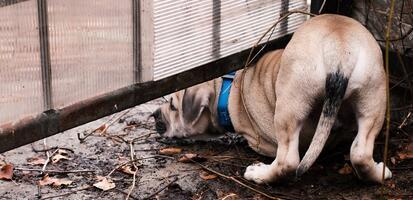
Why do dogs escape from the yard? One of the most common reasons is simply that there is a physical way to leave the property. A dog may jump over a low fence, squeeze through a gap, dig underneath the fence or take advantage of an unsecured gate.
Some dogs quickly learn how to overcome a particular barrier. If they manage to escape once, they may try to use the same route again.
For this reason, property security should be adapted not only to the dog's size but also to its physical abilities and behaviour. A fence that is sufficient for one dog may not be enough for another.
Check whether:
- the fence has gaps through which the dog could squeeze,
- the gate and entrance are properly secured,
- the dog can dig underneath the fence,
- the fence is high enough for the individual dog,
- there are objects near the fence that could help the dog climb or jump over it,
- the dog regularly tries to damage or move the barriers.
Dogs left in the yard without supervision require particular attention. The fact that a dog knows the property does not mean it will always remain within its boundaries.
1. Running Away From Another Dog
One situation in which a dog may suddenly run away is an encounter with another dog. If the animal is attacked, cornered or seriously frightened, it may instinctively try to increase the distance from the perceived threat.
A frightened dog may run without paying attention to its owner's voice. At that moment, the behaviour is not necessarily a matter of disobedience. The animal's immediate priority may simply be to find safety.
The risk can be particularly high when walking in an unfamiliar area. A dog that runs away in a state of fear can quickly lose sight of its owner and have difficulty finding its way back.
With dogs that struggle around other animals, it is therefore important to maintain an appropriate distance and avoid situations in which the dog has no safe opportunity to move away.
2. Chasing Another Dog
The opposite situation can also occur: the dog itself starts chasing another dog. This may be caused by a desire for social contact, excitement, play or competition over space.
The problem becomes more serious when the dog has not developed a reliable recall. When it sees another dog, it may stop responding to its owner's voice.
In such cases, remember that dog recall training should not take place only in quiet surroundings. The dog needs to gradually learn to respond even when attractive distractions are present.
However, the reliability of recall should never be tested deliberately in a situation where the dog could run onto a road or into another dangerous area. Training should progress gradually and take place in safe environments.
3. Chasing Wildlife and a Strong Hunting Instinct
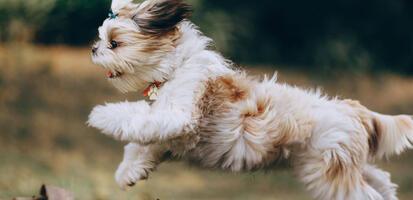
A hunting instinct is one of the important reasons why some dogs move away from their owners. This may be particularly noticeable in breeds that have historically been used for hunting, tracking or pursuing animals.
The scent of a deer, rabbit or another animal can be extremely attractive to a dog. When highly aroused, the dog may focus on the trail and stop responding to signals that it follows perfectly well in calm conditions.
This does not mean that the dog is badly behaved. Hunting behaviour is part of the natural behavioural repertoire of many dogs.
Dogs with a strong prey drive require particularly careful management of their environment. In areas where wildlife may appear, an appropriate leash or training line can be safer than allowing the dog to roam freely.
4. Why Do Young Dogs Run Away During Walks?
Why do dogs run away from home or wander off during walks when they reach adolescence? Young dogs are actively discovering their surroundings. As they develop, their curiosity, independence and interest in the world can increase.
Adolescence can be challenging for owners. A dog that previously returned readily when called may suddenly become more interested in scents, other dogs, people or movement in the environment.
Previous success does not necessarily mean that recall is permanently established. Skills need to be maintained and gradually tested in new situations.
During this period, it is particularly important to provide appropriate exercise, rest, exploration and mental stimulation. A dog that has safe opportunities to explore does not need to look for every opportunity to explore independently.
5. Panic and Sudden Fear
Fear is one of the most serious causes of dogs running away. A dog may be frightened by fireworks, thunderstorms, sirens, gunshots, sudden movement, an accident, shouting or another unexpected event.
When highly aroused, a dog may react extremely quickly. It may pull away from the leash, slip out of a collar or run through an open gate before the owner can react.
During periods when loud noises are more common, it is therefore especially important to secure the dog properly. This applies, for example, during New Year's Eve, thunderstorms or local events involving loud sounds.
If a dog reacts particularly strongly to noise, it is worth preparing a quiet and secure place for it in advance. In cases of severe fear, consultation with a veterinarian or qualified behaviour professional may also be appropriate.
6. An Unsuitable Leash, Collar or Harness
Sometimes a dog does not intend to run away at all, yet it still goes missing. The reason may be accidental escape from walking equipment.
A collar that is too loose, a poorly fitted harness, damaged fastening or a worn leash can fail precisely when the dog needs protection the most.
Before going for a walk, check that:
- the collar fits correctly,
- the harness fits securely and does not allow the dog to slip out easily,
- clips and fasteners work correctly,
- the leash is not damaged,
- reflective and identification elements are securely attached.
For dogs that panic easily or tend to back out of their harness, particular attention should be paid to choosing appropriate equipment.
7. An Inadequately Secured Property
One answer to the question why do dogs run away from the yard is simply that they have a physical opportunity to leave the property.
A damaged fence, low barrier, faulty gate or place where the dog can dig underneath can increase the risk of a missing dog.
Security should not be assessed solely according to the dog's size. Its physical abilities, determination and previous experience also matter. Some dogs can climb, jump, squeeze through surprisingly small gaps or repeatedly dig under a fence.
If a dog regularly tries to escape from the property, it is worth treating this as a signal to improve the physical security and also to consider whether the dog's needs are being met. Simply making the fence higher does not always solve the underlying problem.
8. Sexual Drive
Some dogs may have a strong motivation to search for a mate. The scent of a female dog in heat can be highly attractive to a male and may lead to attempts to leave the property.
A female dog may also attempt to get outside when her behaviour changes during her reproductive cycle.
In these situations, secure fencing and careful management during walks are particularly important. Owners should not assume that a dog that has never attempted to escape will always behave in the same way.
If an owner is considering neutering or spaying for behavioural reasons, the decision should be discussed individually with a veterinarian, taking the dog's health, age and circumstances into account.
9. Leaving a Dog Outside a Shop
A dog should not be left unattended outside a shop. Even if the animal is calm and has never previously attempted to leave, the situation can change very quickly.
The dog may become frightened by a passer-by, another animal, traffic or a sudden noise. It could also be attacked, untied or stolen.
Leaving a dog outside also means that the owner cannot immediately respond if the animal becomes distressed.
The safest option is to leave the dog with a person who can actually supervise it.
10. Separation, Stress and a Change of Home
Some dogs may try to find their owner after moving to a new home, staying in an unfamiliar environment or experiencing a significant separation. Such behaviour may be related to stress, confusion and an attempt to return to a familiar place.
Extra caution is advisable after adoption, moving house or arriving somewhere new. The dog may not yet know the area or feel secure there.
During the first period after a change of environment, it is worth reducing situations in which the dog could accidentally escape. Walks should be carried out with appropriate safety equipment, and the surroundings of the home should be checked carefully.
It is also important not to assume that a dog "knows the way home". In an unfamiliar area, it can quickly become disoriented.
11. Dog Theft or Unlawful Appropriation
Not every missing dog has escaped. A dog can be stolen or taken in by someone who found it but did not take appropriate steps to locate its owner.
The risk may be higher for pedigree dogs, visually distinctive animals or dogs left unattended. Theft or unlawful appropriation can occur during walks, on private property or in other situations where the animal is not under direct supervision.
This is another reason why identification matters. Proper identification and registration can help establish ownership when a dog is found.
Does a Dog That Runs Away Want to Leave Its Owner?
A dog running away does not necessarily mean that it wants to leave its owner. In many situations, the animal is responding primarily to a particular stimulus.
A frightened dog may run because it wants to get away from danger. A hunting dog may chase wildlife because its natural instincts have been triggered. A young dog may follow an interesting scent simply because it is curious.
Interpreting every escape as a deliberate decision to abandon home or family is therefore an oversimplification.
It is more useful to determine what happened immediately before the dog ran away. Understanding the trigger can help prevent similar situations in the future.
How Can You Prevent Your Dog From Running Away?
It is impossible to predict every situation, but the risk of a dog going missing can be significantly reduced. Effective prevention combines physical security, training and an understanding of the individual dog's needs.
In particular, it is worth:
- checking fences, gates and doors regularly,
- using a properly fitted collar or harness,
- checking the condition of leashes and fasteners,
- working on recall in different but safe environments,
- taking the dog's hunting instinct and other natural tendencies into account,
- providing sufficient physical exercise and mental stimulation,
- gradually introducing the dog to new places and stimuli,
- taking extra precautions during thunderstorms, fireworks and other loud events,
- not leaving the dog unattended in places from which it could escape,
- making sure the dog can be identified quickly.
Recall training is particularly important. The dog should repeatedly practise returning to its owner in situations that gradually increase in difficulty. However, it should never be deliberately placed in a situation where ignoring the recall could result in it running onto a road, chasing wildlife or entering another dangerous area.
How Do You Teach a Dog to Come When Called?
Reliable recall is built gradually. Start at home or in another quiet place where there are few distractions.
Once the response becomes consistent, gradually increase the distance and introduce mild distractions. Only later should you move to more challenging environments.
During training:
- use one clear recall cue,
- reward the dog for returning,
- do not punish the dog after it comes back, even if it previously did something unwanted,
- avoid calling the dog repeatedly without a reason,
- increase difficulty in small steps,
- practise in safe areas,
- use rewards that are genuinely valuable to the individual dog.
For dogs with a strong prey drive, recall training alone may not be enough to guarantee safety in every environment. Environmental management and preventing access to situations that trigger chasing behaviour are equally important.
Why Is Dog Identification So Important?
Even a well-secured dog can go missing. Responsible ownership therefore involves not only preventing escapes but also preparing for the possibility that the dog may become lost.
Proper identification can make it much easier to establish who owns a dog when it is found. When a pet goes missing, time matters, so it is worth ensuring in advance that identification information and owner contact details are current.
In particular, make sure your contact details are up to date. If you have changed your telephone number or address, update the information associated with the animal's identification.
We cannot predict every situation that may occur during the life of our four-legged companion. We can, however, reduce the risk and prepare for an emergency.
Make Sure Your Pet Can Be Quickly Identified
To make it easier to find your dog if it goes missing, make sure it is properly identified and that the owner's contact details are up to date.
Register your dog with WORLDPETNET